BS 7671 Amendment 4: What Changes for Your Next EICR?
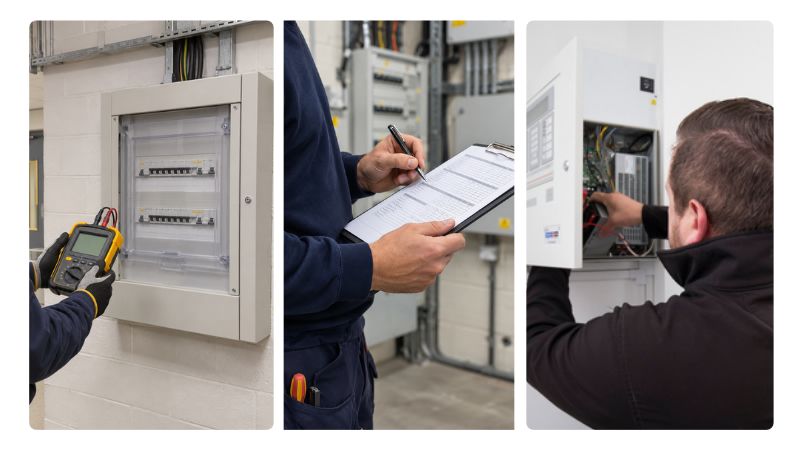
Will the latest Wiring Regulations change the result of your next electrical inspection? With BS 7671 Amendment 4 now the current standard, property owners and managers should understand how the update affects reporting and EICR codes.
The transition period ended on 15 October 2026, when the previous version, BS 7671:2018+A2:2022+A3:2024, was withdrawn. Amendment 4 is now the reference for periodic inspection and testing, alongside new installations and alterations.
For anyone arranging an Electrical Installation Condition Report, an important change concerns further investigation, recorded as FI. However, the new amendment does not automatically mean an older installation needs replacing.
What Is BS 7671 Amendment 4?
BS 7671 sets out the UK standard for electrical installations. Amendment 4 updates the 18th Edition to address developments in electrical equipment, installation practices and safety requirements.
The update includes requirements covering stationary battery installations, Power over Ethernet and functional earthing for information and communication technology. Medical locations are another significant area of revision.
Which changes matter to your property depends on the equipment and installation present. A building with battery storage or specialist medical facilities will raise different considerations from a straightforward office installation.
Your inspector should assess the relevant requirements against the installation’s condition, use and inspection findings.
EICR Codes Explained Under Amendment 4
EICR codes communicate the significance of observations made during an inspection. They help recipients distinguish dangerous conditions from recommended improvements and matters requiring further investigation.
Under Amendment 4, the classifications are:
| EICR code | Meaning | Effect on the overall assessment |
| C1 | Danger present. Immediate remedial action is necessary. | Unsatisfactory |
| C2 | Potentially dangerous. Urgent remedial action is necessary. | Unsatisfactory |
| C3 | Improvement recommended. | Does not make the report unsatisfactory on its own |
| FI | Further investigation advised. | Does not make the report unsatisfactory on its own |
NICEIC confirms that the revised report separates C1 and C2 observations from C3 and FI observations. This distinction is central to understanding the updated EICR coding approach.
What Has Changed About the FI Classification?
Previously, an FI classification resulted in an unsatisfactory assessment. Under Amendment 4, FI alone no longer determines that outcome.
The wording has also changed: FI now advises further investigation, rather than requiring investigation “without delay”.
This does not mean an FI observation should be ignored. It means the recommendation needs to be understood alongside the inspector’s explanation and the other findings.
If your report includes FI, ask what remains uncertain, why investigation is advised and what it will involve. Where investigation reveals a dangerous or potentially dangerous condition, appropriate action will still be needed.
Does Amendment 4 Mean Older Installations Will Fail?
An installation does not become unsafe simply because a newer version of BS 7671 has been published.
The IET’s Amendment 4 guidance explains that standards are not retrospective. An installation designed to an earlier edition is not necessarily unsafe because it differs from current requirements.
An EICR should assess the condition and safety of the installation. The inspector’s findings determine whether remedial work, improvements or investigation are appropriate.
For owners and managers, the useful question is what risk or concern has been identified and how the proposed action addresses it.
EICR Codes Examples: Why Context Matters
Examples can help explain EICR codes, but they should not be used to classify faults without inspecting and testing the installation.
An EICR code depends on the actual circumstances, including accessibility, protective measures, location and the people using the premises.
C1: An Immediately Dangerous Condition
Accessible live parts presenting an immediate electric shock risk illustrate the type of danger associated with C1.
The priority is making the affected part safe. The electrician should explain any isolation or restrictions and what permanent work remains necessary.
C2: A Potentially Dangerous Condition
A defect that compromises protection against electric shock may warrant C2 where it creates potential danger.
The classification must reflect the particular finding. Describing equipment as old or different from current practice is not, by itself, a sufficient explanation.
C3: A Recommended Improvement
A safety improvement may be recommended where the observation does not justify C1 or C2.
Ask the inspector what benefit the improvement would provide and whether it can be planned alongside other maintenance.
FI: Something Needs Further Examination
An inspector may advise further investigation where additional examination is needed to clarify an issue.
Under Amendment 4, this recommendation alone does not make the report unsatisfactory. The report should make the reason for investigation understandable.
How Should You Prepare for Your Next EICR?
Provide previous reports, remedial certificates and available circuit information before the inspection. Tell the inspector about alterations, recurring faults and changes in how the building is used.
Identify equipment such as battery storage, generating systems or specialist installations that may affect the inspection arrangements. Agree access and any necessary electrical shutdowns in advance.
When receiving the report, check which version of BS 7671 has been referenced. For inspections following the October transition, Amendment 4 should be used.
Read the observations and limitations as well as the overall result. A satisfactory assessment does not mean there are no recommendations.
An EICR Coding Guide for Acting on Your Report
Start with C1 and C2 observations, which identify the need for immediate or urgent remedial action.
Then discuss C3 and FI observations with the inspector. Establish which improvements you wish to plan and what investigation is advised.
Where an observation is unclear, ask for its location, significance and recommended next step. A useful report should help you understand the installation’s condition and make informed maintenance decisions.
Keep the report with any subsequent repair certificates and investigation findings so the records remain available for future inspections.
Arrange Your Next EICR With Arundel FireCare Security & Electrical
BS 7671 Amendment 4 changes how aspects of your next EICR are assessed and reported. Understanding the classifications helps you distinguish necessary repairs from improvements and investigation.
Arundel provides electrical inspection and testing for landlords, businesses and homeowners. Explore our EICR services to find out what an inspection involves, or contact our team to discuss your property.
From Our Knowledge Centre
Our security experts have written practical guidance on commercial CCTV and business security. Use the articles below to understand how CCTV can protect your premises
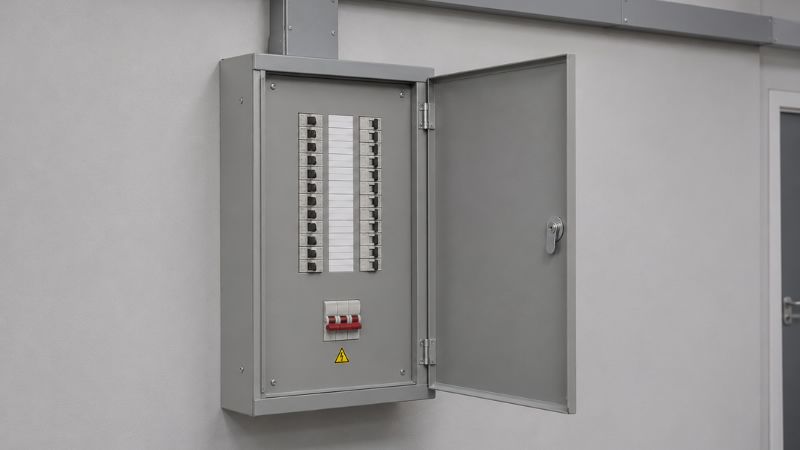
What Is a Fuse Board? A Guide for Commercial Premises
What is a fuse board, and how do you know whether the one serving your business needs…

Failed EICR: C1, C2 and Remedial Work Explained for Landlords
Has your electrical inspection returned an unsatisfactory result? For landlords, understanding the observations and acting within the…

How Much Does a Commercial CCTV System Cost?
How much should your business budget for a commercial CCTV system? The cost depends on the areas…