What Is a Fuse Board? A Guide for Commercial Premises
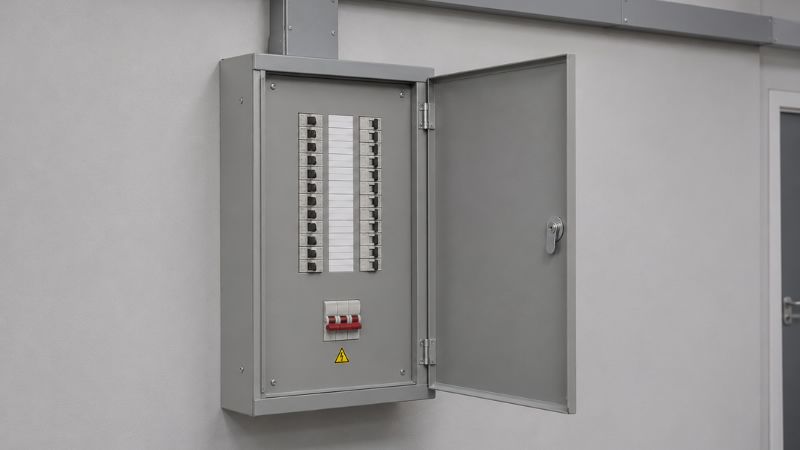
What is a fuse board, and how do you know whether the one serving your business needs attention?
A fuse board distributes electricity to individual circuits and houses devices that disconnect the supply when certain electrical faults occur. These circuits may supply lighting, sockets, heating or equipment.
In smaller premises, you may hear it called a consumer unit. Larger commercial buildings often have distribution boards, sometimes serving different floors, departments or equipment. Understanding the differences helps you discuss inspections, faults and upgrades with your electrician.
Fuse Board, Consumer Unit or Distribution Board: What Is the Difference?
“Fuse board” is a familiar, informal term. It is often used for both older equipment containing fuses and modern boards fitted with circuit breakers.
A consumer unit is a particular type of low-voltage distribution assembly commonly used in homes and some smaller premises. A commercial distribution board may have different ratings, arrangements and operating requirements.
The terms overlap in everyday conversation, but they should not be treated as technically interchangeable in every installation. A shop with modest electrical demand may have a different arrangement from a workshop operating three-phase machinery.
Your electrician should identify the equipment and specification appropriate to your premises.
What Does an Electrical Fuse Board Do?
An electrical fuse board divides the supply between circuits and accommodates their protective devices.
Separate circuits allow different parts of the installation to be supplied and protected appropriately. For example, lighting, socket outlets and fixed equipment may have their own circuits.
The protection provided depends on the devices installed. Fuses and circuit breakers respond to overcurrent, while residual current devices provide a different form of protection. A board’s appearance alone does not establish whether the installation is safe or suitable for its current use.
Main Switches and Isolation
A main switch allows the supply downstream of that switch to be disconnected.
However, switching off one board does not necessarily isolate every electrical source in a commercial building. There may be other boards, battery systems, generators or separate supplies.
Electrical work requires suitable isolation procedures and confirmation that the equipment is safe to work on.
Fuses and Circuit Breakers
Fuses and circuit breakers protect circuits against excessive current, including overloads and short circuits, when correctly selected and installed.
A fuse operates by melting and must then be replaced appropriately. A circuit breaker can usually be reset after the cause of its operation has been addressed.
Repeated operation should be investigated. Replacing a fuse or breaker with a higher-rated device without assessing the circuit can remove essential protection.
RCDs and RCBOs
An RCD detects an imbalance between currents flowing through the conductors it monitors. Depending on its type and application, it can provide additional protection against electric shock.
An RCBO combines residual current protection with overcurrent protection for a circuit. An RCD on its own does not provide overload protection. NICEIC’s consumer unit guidance explains these protective arrangements.
What Is a 3 Phase Fuse Board?
A “3 phase fuse board” generally refers to a distribution board supplied by a three-phase electrical system.
Three-phase supplies are common in commercial and industrial settings, particularly where equipment or overall demand requires them. A suitable board may distribute electricity to both three-phase equipment and single-phase circuits.
The number of phases alone does not determine whether an installation needs upgrading. The assessment also considers demand, circuit arrangements, protective devices and equipment condition.
If you are adding machinery, heating, catering equipment or EV charging, discuss the proposed load with your electrician before installation.
What Should You Do If Your Fuse Board Keeps Tripping?
If your fuse board keeps tripping, a protective device is operating. Possible causes include faulty equipment, damaged wiring, moisture, excessive load or accumulated earth leakage.
A trip does not automatically mean the board needs replacing. The cause needs identifying.
Record which device operates, when it happens and what equipment was running. This information can help an electrician investigate the fault.
Avoid repeatedly resetting a device without understanding why it has operated. Do not remove covers or attempt repairs inside the board.
Burning smells, smoke, sparking or visible damage require urgent attention. Keep people away from affected equipment and follow your emergency procedures. If there is a fire or immediate danger, call 999.
When Might a Fuse Board Upgrade Be Needed?
A fuse board upgrade may be appropriate where inspection identifies defects, existing protection is unsuitable or planned changes exceed the installation’s capacity.
Reasons to arrange an assessment include:
- Damage, overheating or deterioration.
- Recurring faults or unexplained tripping.
- Additional circuits or increased electrical demand.
- Insufficient space for suitable new protective devices.
- Inspection findings requiring remedial work.
- Obsolete equipment for which suitable parts are unavailable.
Age alone does not establish that a board is unsafe. The IET explains that newer wiring standards do not automatically make older installations unsafe. Condition and suitability need assessing.
Does an EICR Tell You Whether Replacement Is Necessary?
An Electrical Installation Condition Report assesses the fixed electrical installation within an agreed scope. It can identify concerns involving the board, protective devices, wiring and other parts of the installation.
If replacement is recommended, ask which findings support that recommendation and what alternatives have been considered.
Some issues can be addressed through targeted repairs. Others may justify replacing the board or carrying out wider work.
An EICR inspection helps establish the installation’s condition before decisions are made about upgrades.
What Affects Fuse Board Replacement Cost?
Commercial fuse board replacement cost depends on the installation. A domestic package price is unlikely to provide a reliable budget for a larger commercial distribution board.
The quotation may need to account for:
- Board type, rating and number of circuits.
- Required protective devices.
- Existing wiring, earthing and bonding.
- Access, isolation and shutdown arrangements.
- Testing, certification and associated repairs.
- Temporary supplies or work outside operating hours.
Ask what is included and whether existing faults could require additional work. A replacement board does not automatically resolve defects elsewhere in the installation.
Planning Fuse Board Replacement for Your Business
Electrical shutdowns can affect lighting, IT, refrigeration, security and other essential services.
Before work begins, identify which activities will be interrupted and agree arrangements with your contractor. Some premises may need phased work or an out-of-hours shutdown.
Provide previous reports, circuit schedules and information about critical equipment. After completion, retain the certification and updated circuit information with your maintenance records.
The HSE recommends using people with suitable competence for electrical work. Commercial installations may require experience beyond straightforward domestic work.
Get Advice on Your Commercial Fuse Board
Whether you are investigating recurring trips, planning additional equipment or considering fuse board replacement, start with an assessment of the installation.
Arundel provides commercial electrical services, including distribution board upgrades, three-phase installations and inspection and testing.
Contact our team to discuss your premises and arrange the appropriate next step.
From Our Knowledge Centre
Our security experts have written practical guidance on commercial CCTV and business security. Use the articles below to understand how CCTV can protect your premises

Failed EICR: C1, C2 and Remedial Work Explained for Landlords
Has your electrical inspection returned an unsatisfactory result? For landlords, understanding the observations and acting within the…
BS 7671 Amendment 4: What Changes for Your Next EICR?
Will the latest Wiring Regulations change the result of your next electrical inspection? With BS 7671 Amendment…

How Much Does a Commercial CCTV System Cost?
How much should your business budget for a commercial CCTV system? The cost depends on the areas…